 aibio
Dermata enrolls first participant in Tome Clearing Treatment trial
Tickers DRMA
Dermata Therapeutics enrolled the first participant in a clinical trial of Tome Clearing Treatment, its once-weekly acne treatment. The company expects to launch its second commercial product in the first half of 2027.
Key facts
- Company
- Dermata Therapeutics, Inc. (NASDAQ: DRMA)
- News type
- Company Updates
- Primary source
- Dermata Therapeutics, Inc. 8-K (2026-10-29)
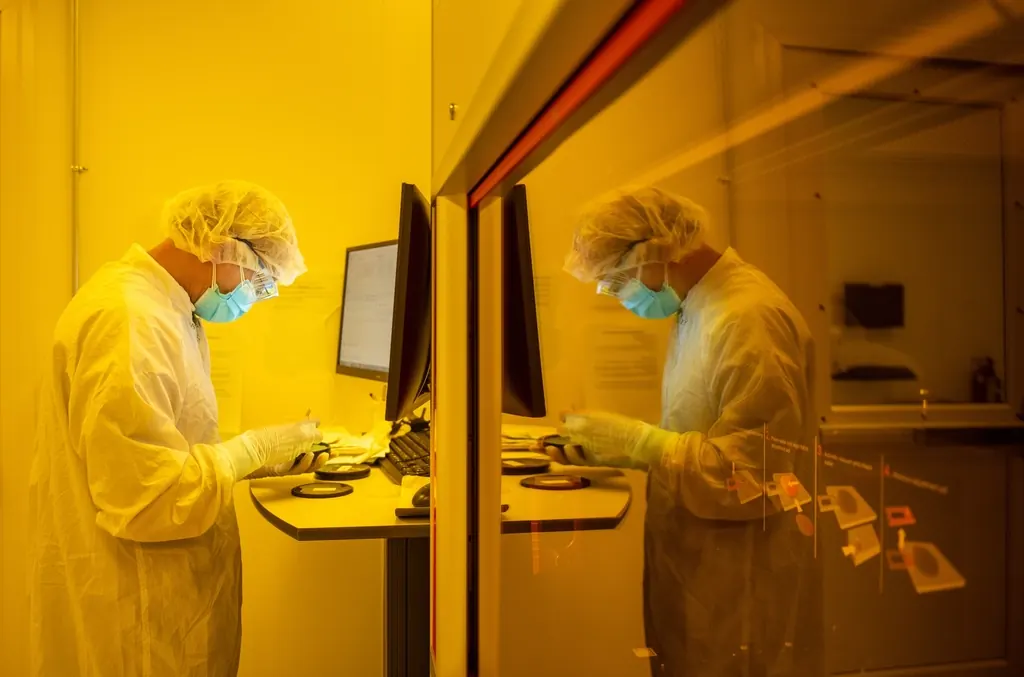
Dermata Therapeutics, Inc. (Nasdaq: DRMA) has enrolled the first participant in a clinical trial evaluating Tome Clearing Treatment, the company's once-weekly acne treatment, in participants with acne. The company disclosed the step in a Form 8-K dated October 29, 2026, filed under Item 8.01 (Other Events). The filing says the company issued a press release announcing the enrollment, and it was signed by Gerald T. Proehl, Chief Executive Officer. The 8-K also says the company expects to launch this second commercial product in the first half of 2027.
The filing does not describe the trial design, the number of participants planned, the trial sites or a timeline for results. It gives the fact of the first enrollment and the launch window, nothing more.
From prescription acne to skincare
Dermata was founded to research and develop prescription products subject to FDA approval. Its lead asset, XYNGARI, also known as DMT310, was studied for moderate-to-severe acne. In March 2025, the company said XYNGARI had shown statistically significant results across all three co-primary endpoints at weeks 4, 8, and 12 compared with placebo in its Phase 3 STAR-1 trial.
After a full review of the prescription acne path, management, with support from the board of directors, decided in September 2025 to shift toward developing and distributing direct-to-consumer (DTC) and business-to-business (B2B) skincare products that are backed by science. The company said the shift could give it a better path to commercialization, with potentially greater financial upside and faster time to market.
The 10-K describes the market the company wants to reach. The company says over 50 million patients in the U.S. have acne, and that over 70% of patients with acne first try multiple OTC products before seeing a dermatologist. It adds that consumers with unsatisfactory results typically wait about one year before scheduling a visit with a dermatologist. Dermata says many currently available OTC acne products are mildly effective and have tolerability issues that result in poor patient compliance.
The product line
The company's hero ingredient is Spongilla lacustris, a freshwater sponge that Dermata processes into a fine, purified powder with no additives. The planned foundational treatment uses the Bioneedle, which the 10-K describes as 100% Spongilla lacustris powder, combined with a fluidizing agent for easy application. The 10-K says the company planned to launch its first cosmetic product in the middle of 2026, with its first OTC acne product to follow shortly thereafter.
The 8-K names Tome Clearing Treatment as a once-weekly acne treatment in trial. The 10-K describes a planned OTC topical acne system. The two filings do not link the two names, so this story does not treat them as the same product.
Financial position
Research and development expense was $2.9 million in the fiscal year ended December 31, 2025, down from $8.2 million in 2024, according to the company's 10-K filed March 26, 2026. Net loss was $7.6 million in 2025, compared with $12.3 million in 2024. Cash used in operations was $7.8 million in 2025 and $11.2 million in 2024.
Year-end cash and cash equivalents were $3.2 million at December 31, 2024, according to the 10-K. The company's 10-Q filed August 11, 2026 reports $7.5 million at December 31, 2025, and $4.4 million at June 30, 2026.
The 10-K lists lower development expenses among the expected benefits of the shift. The sources give no p-values or effect sizes for STAR-1, and the company set aside the prescription path that trial supported.
The risks ahead
The company still has to show that its shift to skincare products can turn into sales. It lost $7.6 million in 2025 and used $7.8 million of cash in operations, against $4.4 million of cash and equivalents at June 30, 2026. The company says it expects to launch its second commercial product in the first half of 2027. The 8-K gives no trial design, size or results date. It warns that the timing and success of product launches and market acceptance are uncertain, and that results could differ materially and adversely from its statements.