 aibio
Bluejay completes Toray manufacturing site ahead of deadline
Tickers BJDX
Bluejay Diagnostics said it finished establishing a Symphony cartridge manufacturing site under its amended Toray license, ahead of an October 23, 2026 deadline.
Key facts
- Company
- Bluejay Diagnostics, Inc. (NASDAQ: BJDX)
- News type
- Company Updates
- Primary source
- Bluejay Diagnostics, Inc. 8-K (2026-10-13)
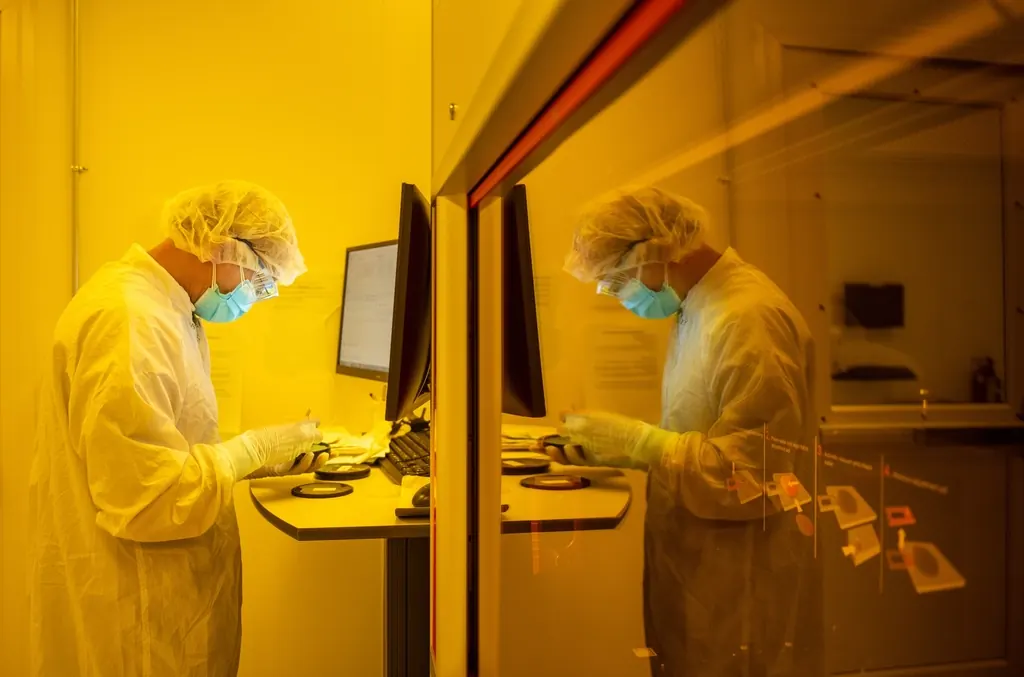
Bluejay Diagnostics, Inc. (NASDAQ: BJDX) said on October 13, 2026 that it has completed the establishment of a manufacturing site for its Symphony cartridges. The company calls this a contractual milestone under its amended license agreement with Toray Industries, Inc. (Toray). Bluejay reached it ahead of the October 23, 2026 contractual deadline, and it has formally notified Toray that it has fulfilled its obligation to substantially complete the establishment of a manufacturing site.
The milestone
The site is SanyoSeiko Co., Ltd. in Japan, which the company describes as the manufacturing site established under its agreement with Toray. Bluejay calls SanyoSeiko an important component of its Symphony cartridge manufacturing infrastructure. The company is also building a second pathway in the United States with ALURIS Sciences, previously known as Argonaut Manufacturing Services. Bluejay says the two partners together are intended to give it a more diversified and resilient manufacturing base and to reduce its reliance on a single manufacturing pathway.
Neil Dey, President and Chief Executive Officer of Bluejay Diagnostics, said: "Achieving this manufacturing milestone is an important accomplishment for Bluejay and another tangible step in our progression toward regulatory and commercial readiness."
Dey also said the strategy is designed to extend beyond a single facility or geography. In his words, the goal is to build complementary manufacturing pathways that can provide greater flexibility, redundancy and supply-chain resilience. Bluejay said the scale-up work continues alongside its regulatory program for the Symphony IL-6 Test, the company's first product candidate.
Financial position
The October 13 release does not include financial results. Bluejay's XBRL financial data, drawn from its annual report filed March 6, 2026, shows research and development expense of $3.0 million for the fiscal year ended December 31, 2025, compared with $3.5 million for 2024. For 2025 the company reported net income (loss) of negative $6.8 million, compared with negative $7.7 million for 2024. Cash from operations was negative $6.1 million for 2025, compared with negative $7.8 million for 2024.
The same data shows cash and cash equivalents of $9.6 million at June 30, 2026, taken from the company's quarterly report.
Bluejay says it believes the milestone reduces business and commercial execution risk. That is the company's view. The milestone is a contract step about a site, not proof that cartridges are being made at volume, and the release gives no output, cost or timing. The second pathway with ALURIS is still being built, which the release itself frames as a way to cut reliance on a single manufacturing pathway. Cash used in operations was $6.1 million in 2025, against $9.6 million of cash at June 30, 2026, so the company has limited room while it waits on the FDA.
The product and the FDA
Bluejay describes itself as a medical diagnostics company focused on improving patient outcomes with its Symphony System, a near-patient testing system for sepsis triage and monitoring of disease progression. Its first product candidate is an IL-6 Test for sepsis, which the company says is designed to give results in approximately 20 minutes.
The Symphony IL-6 Test has not been cleared or approved by the U.S. Food and Drug Administration (FDA) and is not currently available for commercial clinical use in the United States. The company says the Symphony platform is an investigational device, limited by United States law to investigational use. Bluejay plans to use its SYMON-II pivotal study to support a 510(k) application to the FDA. The release does not give a date for that submission, and it says the company will need FDA authorization before Symphony can be marketed as a diagnostic product in the United States.